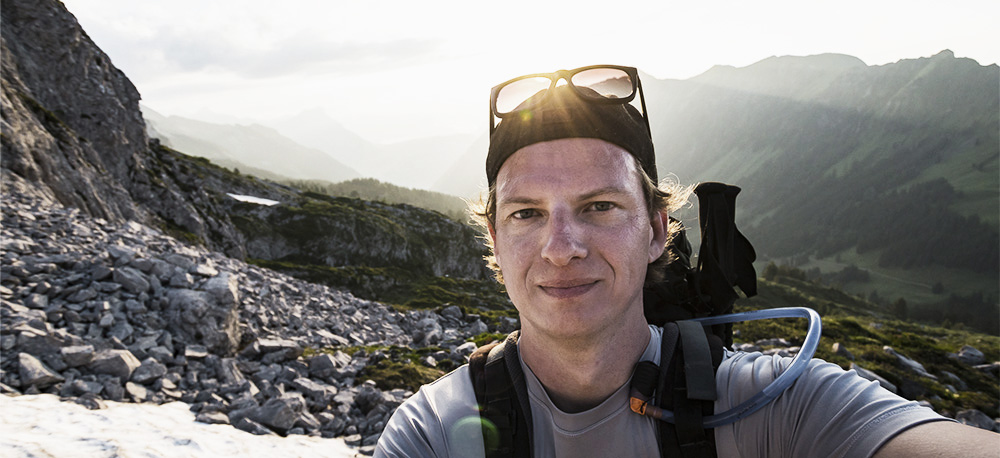
My name is Thomas M. Massie and I am a biologist/ecologist.
I have a background in theoretical ecology. That is, I am addressing fundamental ecological processes such as (resource) competition, predator-prey interactions, synchrony among and within populations and so on. These processes influences the dynamic behaviour of single individuals, populations, and, of course, entire communities since no species is isolated from others within an ecosystem.
At the same time I am also an experimental ecologist. I really enjoy designing and performing experiments that yield accurate and reproducible data – which can be quite challenging when it comes to avoiding any disturbing influences that may lead to additional, unwanted ‘noise’. Hence, it is absolutely worth choosing an experimental system that delivers reliable data to adequately inform your models. Because your analysis, the insights you infer from these, as well as any forecasts you make can be only as good as the data you work with.
After 4.5 years working as a postdoc at the University of Zurich, I recently decided to stop my academic career for now, take a personal sabbatical and start a new chapter by working in…
…Data Science & Information Design
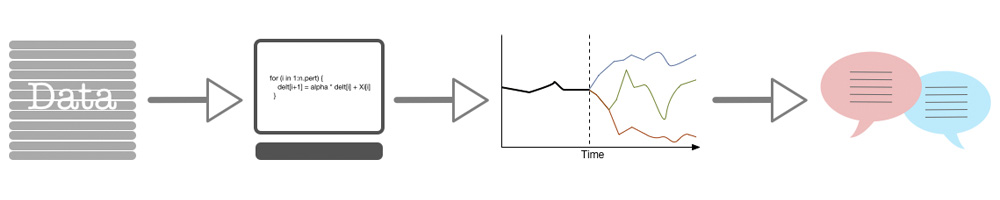
I love to search data for patterns that surprise me. Do not get me wrong! It is great when data confirms what you already know or expect. However, surprises are inevitable and very important. And also: fun. I mean, if you could decide whether to go with something simple, straightforward and expectable, or, you could choose something novel, challenging and unexpected… Well, I guess you get what I am saying. (That being said, getting no confirmation at all is pretty frustrating…)
It is these surprising elements that make them also challenging when it comes to communication. Because what you already know is easy to understand, often by intuition. But unknown facts and patterns are far more complicated being made accessible to your mind. And that is where good communication comes into play.
I believe that information, even of the highly complex kind, can be communicated to (almost) any audience. But therefore you have to know your audience and be aware of available communication tools. And, maybe not that easy for scientists, you have to do the splits between accurately reflecting data and facts, and the degree of simplification that is necessary to make them graspable for your audience. A challenge, but a very cool one!
…Nature Conservation
Well, biology and nature conservation have always been and still are at the core of all my activities. I draw my motivation from the idea of contributing in whatever way to the preservation of our environment and a sustainable way of living.
I have a broad knowledge and interest in various fields of biology. By training, my main expertise is within
- theoretical ecology (population / community dynamics, interactions, networks…)
- nature conservation in general
- aquatic systems, especially fresh water (lakes and rivers; i.e., limnology)
- microbiology (microorganisms, life cycles, ecology, use as model organisms…)
However, I always felt that, although being a theoretical ecologist, I have to be familiar with the environment that surrounds me. Thus, I spend a lot of my spare time outdoors. To me, it would be an odd situation if my kids or friends ask me about a specific plant or animal and I could not tell them anything about it. And actually, this is not only odd, but also a bit dodgy. Imagine you are modelling a system, describe life cycles and interactions, but actually, you do not have any idea about the characteristics of these organisms and the environment they live in. That does make only limited sense to me, if so at all.
That is, I am pretty familiar with the regions in which I used to live (Upper Swabia, Lake Constance, Hesse, Brandenburg/Berlin, Zurich) and the respective types of habitats one can find there. It would be great being involved in a way more applied form of nature conservation compared to what I have done so far.
…Education
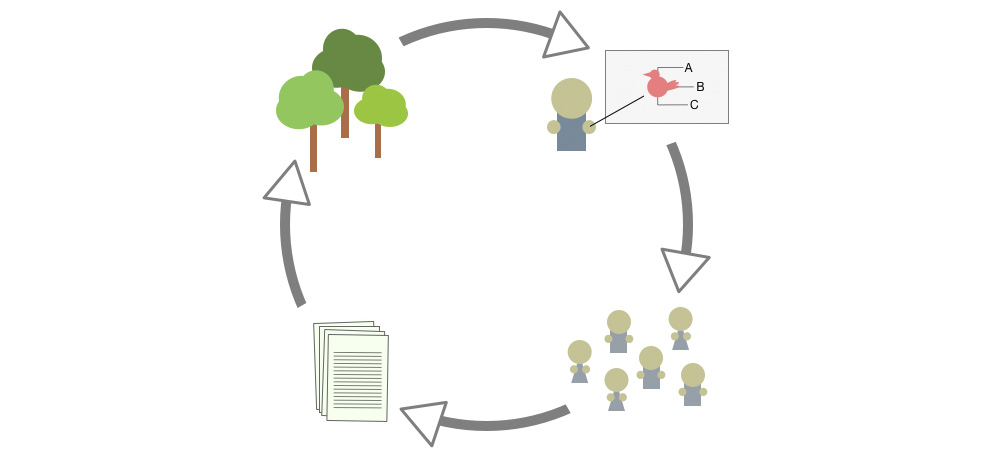
I believe that most people only preserve what they are aware of. You have heard about slaughtered rhinos, sharks being killed for their fins, or polar bears dying because of melting ice making it impossible for them to hunt. Any human being has to be aware of the fact that nature’s condition is not good, and it is getting visibly worse. Documentaries from BBC and others do an amazing job in reaching a vast number of people showing them nature with all its beauty, curiosities and wonders, and at the same time informing them about the various ways humans are threatening it. I am sure that from these documentaries alone a great number of people got interested in nature and might have even engaged in nature conservation. That is cool!
But having said that, I see that the direct environment many viewers live in gets much less attention. I always used to live in regions where I could not encounter elephants or sharks or polar bears. The last bear was killed in the early 19th century, the last wolf at the transition into the 20th century (but, latter are back again). But besides these iconic species there are so many more to discover and that are fascinating because of their habitus, behaviour, life cycle or role inside an ecological network. Without knowing what lives around you, you will have no interest in preserving it. That is why awareness training is so important.
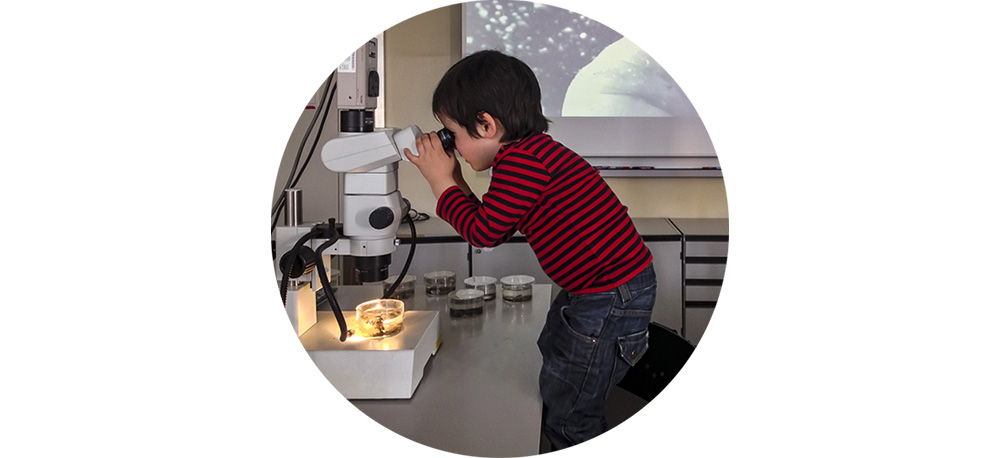
I love explaining nature – phenomena, patterns, organisms, interactions and so on – to kids and grown-ups likewise. I often do this at my kids’ kindergarten (Freier Chindsgi Hoenggerberg). It is fun to show them slow-worms, common toads or alpine newts. Some have never seen a slow-worm and understandably believe that it is a snake. Common toads are not frogs and they can get along pretty well without water. However, at some point in their life it is critical because of their amphibian way of life. And this lets one also explain the similarities between an alpine newt and the famous axolotl.
Giving people of any age an understanding of nature is one of the most rewarding things I can imagine. This and the fact that you can change the current situation to the better is why I would love being involved in any kind of education projects dealing with nature and/or natural sciences.
.